Minneapolis Contractor Permit Lookup: What a Company Has Built Here Before You Hire
Search the city's permit file by company name or address, then see which Minnesota state license goes with a roofing, remodeling or solar job and how many residential permits the city issues each year.
Updated
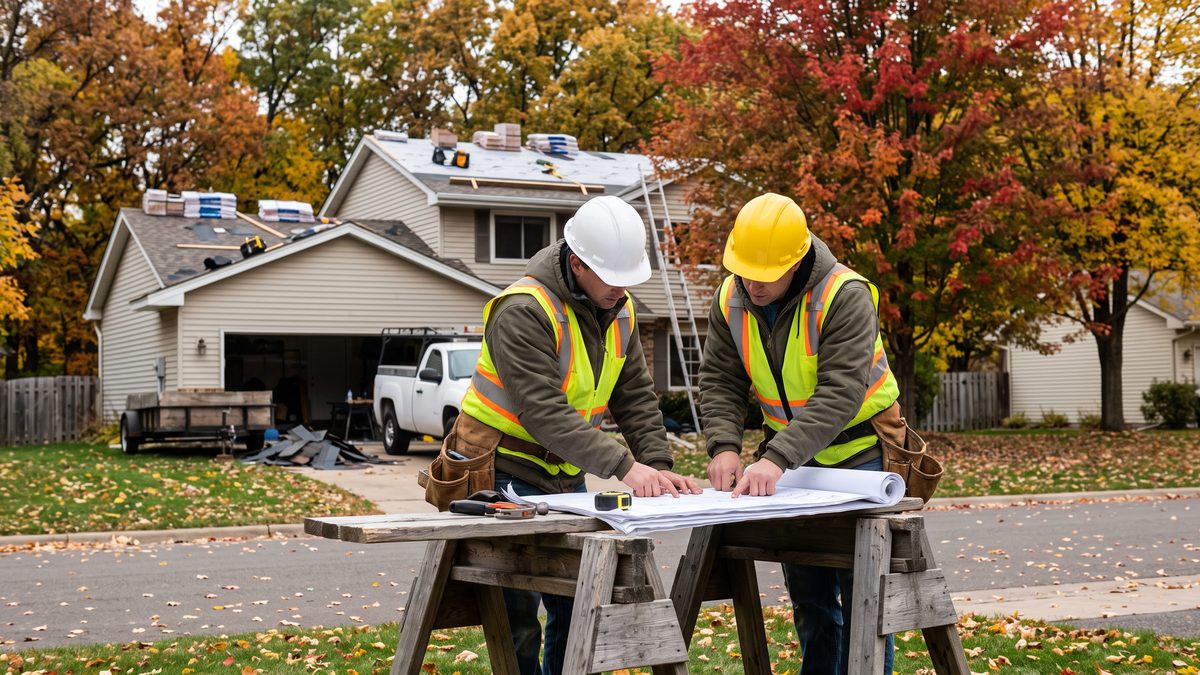
Before you sign with a contractor, see what the company has pulled permits for in Minneapolis. The city's permit file goes back to December 2016, and you can search it by company name or by street address.
Searches the city's building, plumbing and mechanical permit records from your browser. Part of a name is enough, three letters at least.
Which state license goes with which job
A permit shows the city saw the job. A license shows the state allows the company to sell it. The Minnesota Department of Labor and Industry (DLI) licenses residential contractors for one to four unit homes, and the rule turns on how many kinds of work the company sells.
| The company offers | License the state asks for |
|---|---|
| Only roofing | A residential roofer license, or a residential building contractor or remodeler license. A roofer license covers roofing only, so the same company cannot also install gutters, downspouts, soffit or fascia. |
| More than one of the state's eight skill areas, such as masonry and carpentry | A residential building contractor or residential remodeler license. A remodeler works on existing structures only and cannot build new homes or detached garages. |
| One skill area other than roofing | DLI does not ask for a state license, though permit rules still apply. Electrical and plumbing contractors have their own DLI programs. |
| Solar panels on a home | Since July 1, 2023, a residential building contractor or remodeler license, with the wiring done by a Minnesota licensed electrical contractor. |
Not everyone is covered. Employees of a licensed company, owners working on their own property and landlords working on their own rental units (except plumbing and electrical) do not need one. A residential building contractor with under $15,000 a year in residential receipts can hold a certificate of exemption instead. For a roofer license, DLI asks for a $15,000 surety bond and liability cover of at least $300,000 per occurrence. DLI's own license and registration lookup takes a name or a license number.
Residential permits, year by year
Residential building permits issued by the city in each calendar year, from its own file. The jump in 2023 and 2024 is in the data, and the file does not say why.
| Year | Residential permits | Declared value |
|---|---|---|
| 2017 | 9,065 | $193 million |
| 2018 | 9,395 | $202 million |
| 2019 | 10,366 | $215 million |
| 2020 | 9,632 | $193 million |
| 2021 | 11,027 | $230 million |
| 2022 | 9,962 | $218 million |
| 2023 | 15,923 | $343 million |
| 2024 | 16,914 | $376 million |
| 2025 | 10,240 | $265 million |
How to read a name in the results
The applicant is not always the builder
The file lists whoever applied. That is often a contractor but can be a homeowner who pulled the permit, or an architect. A company may also apply under a trade name that differs from its state license.
No permit is not always a red flag
Not every repair needs one, and we do not list which jobs do here. Ask the contractor in writing who will pull the permit and whether it is in the quote, and ask the city's permit staff through 311 if you are unsure.
For the other half of the check, our lists of general contractors, roofing companies, kitchen remodelers, siding contractors and home inspectors show who is worth calling in the first place.
The permit file was read on November 15, 2026 and the city refreshes it weekly. Where the figures come from: how we order our lists.